Three finishes dominate nail photos right now, and their names explain almost nothing. Chrome is a powder rubbed over gel that gives a mirror or pearl surface. Cat-eye uses magnetic particles in the polish that shift into a band of light when a magnet is held over the wet layer. Jelly is a translucent color, like tinted glass, that lets the nail show through in a soft, squishy-looking layer. Each is a technique, not a product category, and the claims made about them online mix the two up constantly.
At Nail'Lyn in Gastonia, all three are finishes that can sit over gel polish and other systems offered there. What follows sorts the common claims so you can pick by wear and upkeep, not by hype.
The claims, sorted
| Claim | Verdict | Why |
|---|---|---|
| Chrome is a separate type of nail service | False | Chrome is a powder finish rubbed over cured gel color. The service underneath is still gel, acrylic, or another system, and that system sets the wear. |
| Chrome lasts longer than regular gel | It depends | The powder itself adds no strength. Sealed well with top coat it wears like the gel under it; sealed poorly, the mirror edge rubs off first. |
| Cat-eye polish needs a special lamp | False | It needs a small magnet, held over each nail before curing to move the magnetic particles into a line or wave. The lamp is the standard gel lamp. |
| Cat-eye only works in dark colors | False | Dark shades show the light band most dramatically, but pale and sheer cat-eye polishes exist and give a softer shift. |
| Jelly nails are weaker because they are translucent | False | Translucency is just pigment level. Strength comes from the gel structure under or in the jelly layers, not from how much color you can see through. |
| These finishes cannot be done on short nails | False | All three work on short nails. Chrome and jelly are especially tidy on short lengths; cat-eye simply shows a shorter band of light. |

How each effect is actually made
Chrome starts as an ordinary gel set. Once the color is cured, a fine powder is burnished onto a tacky or specially prepared surface with an applicator, then sealed. The mirror comes from the powder's flat particles lining up, which is why fingerprints and dust during application matter. Cat-eye polish contains tiny magnetic particles. The technician paints a nail, holds a magnet close for a few seconds to pull particles into a bright band with darker edges, then cures it before the pattern drifts. Jelly is built in thin translucent layers, sometimes over a milky base, sometimes with the natural nail or a tip showing through on purpose. It is the only one of the three where seeing the nail is the design.
How they wear in real life
Chrome shows scratches and loses its mirror first at the free edge and over the highest point of the nail, softening into a satin shine that many people still like in week two. Cat-eye wears like the gel it is, with the pattern staying put once cured; its main enemy is a chip in the underlying set, not fading. Jelly is forgiving: small edge wear is hard to see through a translucent layer, and grow-out at the cuticle is gentler than with an opaque dark color. For hands that type, clean, and work around Gastonia all week, jelly is often the low-maintenance pick of the three, while chrome is the high-impact, higher-upkeep one.
Removal and nail health
None of these finishes changes removal in a meaningful way, because removal follows the system underneath. Gel-based versions soak or file off like other gel, and the chrome powder or magnetic layer comes away with the color. The health rule is the same as always: product that is soaked or carefully filed off leaves nails in good shape, and product that is pried, peeled, or bitten off does not, whatever finish was on top. If a finish tempts you to pick at a lifting edge, that is useful information to share at your next appointment in Gastonia.
Common questions
Can I put chrome over regular nail polish?
Chrome powder is designed for gel surfaces and usually needs a gel top coat to seal it. Over regular polish it tends to look dull and wear off quickly, so gel is the standard base.
Does the cat-eye magnet touch the nail?
No. The magnet is held just above the wet polish for a few seconds, close enough to move the particles without touching, and then the nail is cured to lock the pattern.
Which finish hides grow-out best?
Jelly, because the translucent color near the cuticle blends with the natural nail as it grows. Sheer cat-eye shades are a close second, while opaque chrome shows a clearer line.
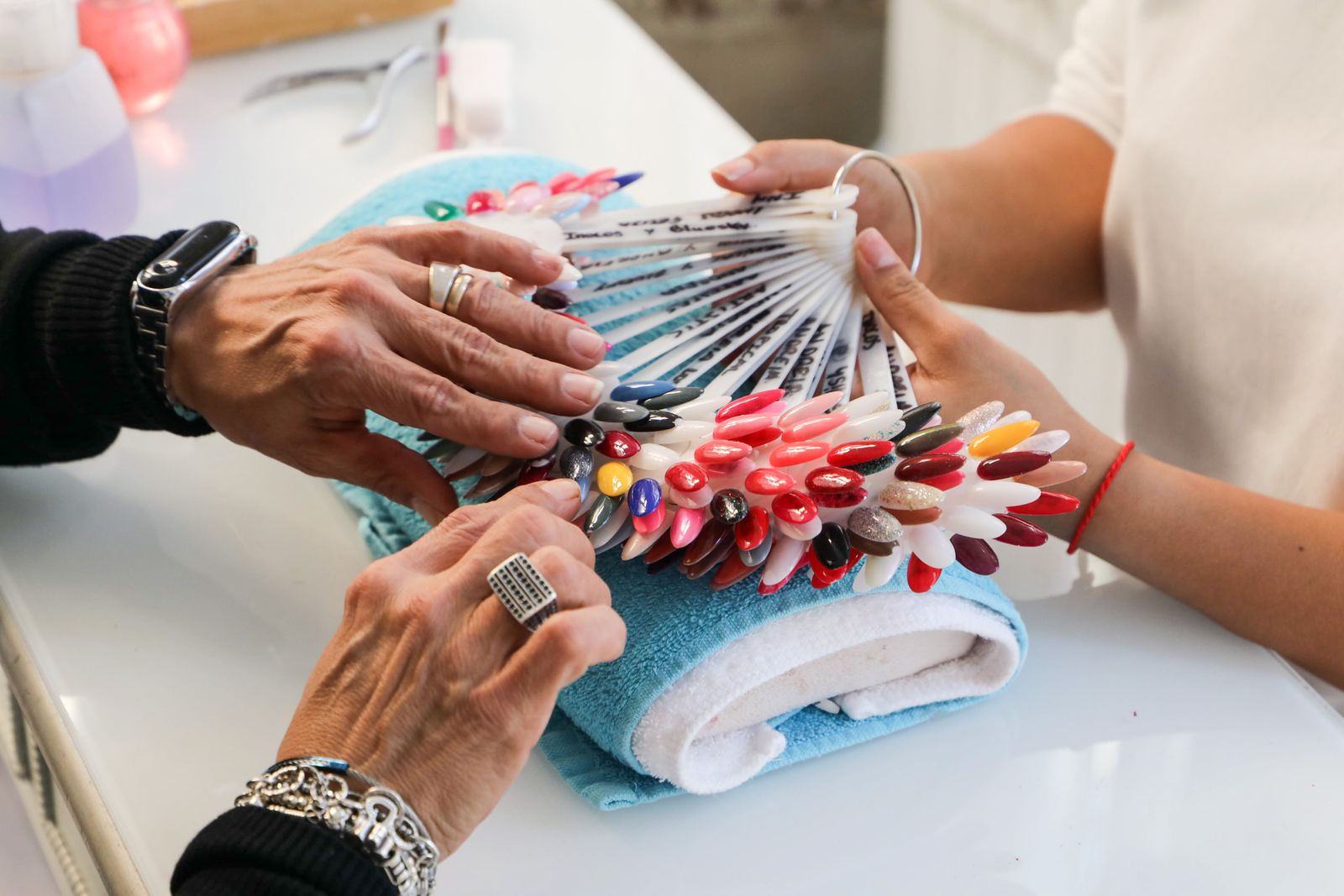
Photos in this guide are representative stock images.
← All guides from Nail'Lyn← Back to Nail'Lyn